
Exciting Adventures With Animals Around the World: 6 Tales (Video)
- At May 17, 2020
- By Phares O'Daffer
- In All Posts, Presentations
 0
0
This presentation is about six true stories involving animals that happened to me and my wife Harriet on some of our memorable travels. A couple of the stories are PG-13 rated.
Enjoy!
Can Books Influence Your Life? You Bet!
In the absence of something more interesting to do on a rainy Friday afternoon when I was 11 years old, I meandered up the narrow stairs to the attic of our sprawling old farmhouse.

O’Daffer Farmhouse– Ruby’s Library just Below the Chimney
My mother Ruby had created a little library up there, with books from her brother Bill and others she had bought at property sales over the years.

The farmhouse library looked something like this.
As I scanned past Tarzan jungle books, Zane Grey westerns, Jack London dog books, and a couple of books by Mark Twain, my eyes fell upon some books I hadn’t looked at before.
They had titles like “The Erie Train Boy,” “Ragged Dick,” and “Tom The Bootblack,” and were written by an author I’d never heard of: Horatio Alger, Jr.
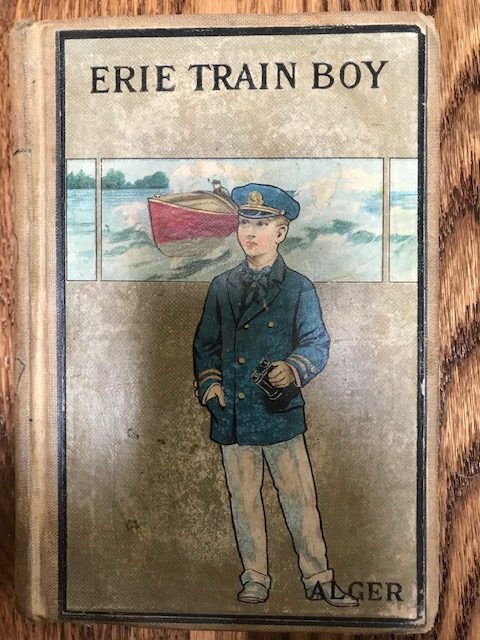
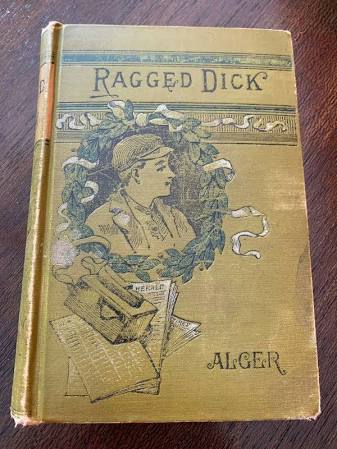
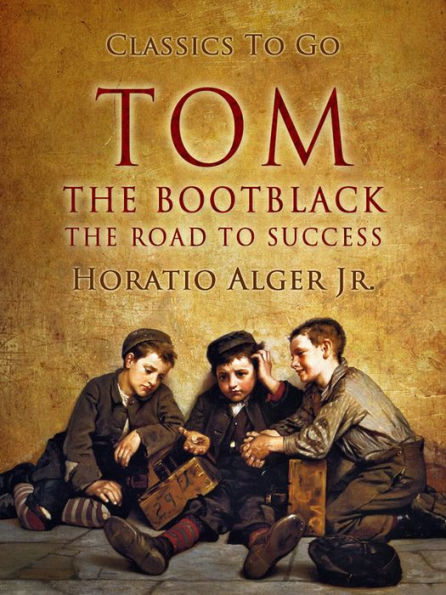
Yes, you guessed it! It was the start of a new reading adventure, and before it was over I probably read 20 of Alger’s books that year, with more to come.
Why Did I Start and Keep Reading the Alger Books?
Well, the Alger stories were almost always based on a “rags to riches” theme featuring young boys from poor backgrounds who, through hard work, strong character, honesty, acts of bravery, and determination, attained the benefits of the middle-class.
Alger wouldn’t have had to look twice to see that my family, like the ones he was writing about in his books, was poor. We were definitely in the “lower economic class,” striving mightily to sneak up into the middle.
I became engrossed the stories because I was, in a way, in the same boat as some of Alger’s characters, and could relate to what was going on.
It sure was satisfying when a poor country boy risked his life to rescue someone from an overturned carriage, and was rewarded handsomely by a rich benefactor for his courage and bravery.
And there sure were plenty of things like that in Alger’s books to keep me reading!
So What Did I Gain From the Alger Books?
As I look back on it, the boys who were heroes in Alger’s books not only moved from “rags” to “riches,” but in the process they demonstrated a host of personal characteristics that every parent and Sunday school teacher would die for.
For example, they did not cheat or tell a lie—they were, in a word, impeccably honest. They cared about people, respected them, and went out of their way to help them. They were confident in themselves and what they could do. They were open, and related well to other people. They thought carefully about things, and made wise decisions. They were brave and courageous.
In retrospect, I think these heroes subtly influenced me. And I often tried, pretty much without knowing it, to emulate them.
When I was in early high school, my basketball coach died. Grief stricken, I decided to use all my meager savings to buy Christmas presents for his family. I remember, when I shopped for and delivered those presents, that I felt good about having done the right thing.
Who knows why I was motivated to do this, and some other good things I tried to do along the way? One never knows, but I don’t think I could go too wrong in giving credit not only to my family, friends, and church, but also to those “near perfect” Alger heroes.
Just to Let You Know I Wasn’t the Only One
The following paragraph, which was adapted from an article, “Horatio Alger: The Moral of the Story” by Stephan Kanfer, attests to the value of Alger’s books for some successful people.
The influence Alger had on American Youth was incalculable. …To journalist Heywood Broun, Alger’s books were inspiring, simple tales of honesty triumphant…Groucho Marx said “Alger’s books conveyed the message to me and my friends that if you worked hard at your trade, the big chance would eventually come… as an old man, I think of his message as the story of my life.” Ernest Hemmingway’s sister said “there was one summer when Ernest couldn’t get enough of Horatio Alger… there must have been something in Alger’s stress on grit and self reliance that affected young Ernest.”
And my son, Eric, is a close-to-home testimony to Alger’s books. Eric recalls that when he was 12 yrs. old I offered him a bribe of $5 if he would read Alger’s book “Luke Walton – Chicago Newsboy” on our trip to the Black Hills. (I wonder how the book happened to be along with us on the trip?)
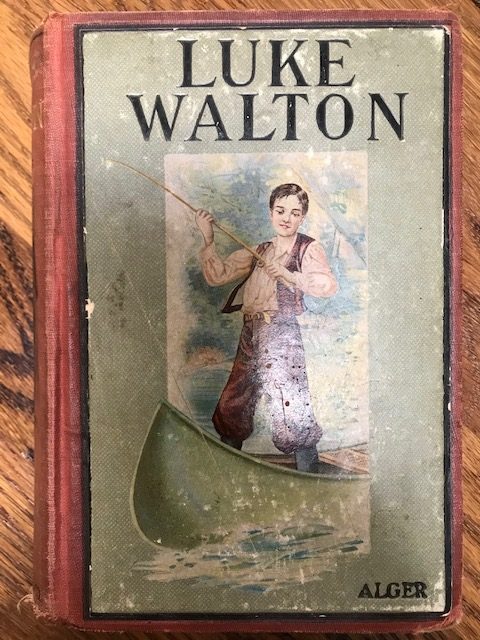
Nevertheless, Eric developed an interest, and went on to read and collect around 80 of the Alger books.
There are Two Sides to Every Story
I think it is accurate to say that Alger’s life was not always as pure as the lives of the heroes in his books, and this caused some people to question his books. Here is a brief thumbnail sketch of Alger’s life. (Adapted from Wikipedia and the Kanfer article.)
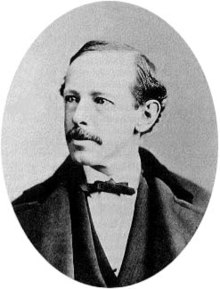
Horatio Alger Jr (1832-1899)
- Born in 1832, Unitarian Minister’s son, Plagued as a youth with myopia and asthma, never taller than 5’2.” Exempted from military service in 1863 for health reasons. Alger had what he called “a nervous breakdown” in 1896, and died in 1899.
- Went to Harvard in 1848, winning several scholarly awards – 8th in class of 88. Attended Harvard Divinity School in 1853 and again from 1857-1860.
- Became a Unitarian minister in 1864. In 1866, it was reported that Alger had sexually molested two boys. Alger did not deny the report, wrote a letter of remorse, and left the ministry. No charges were filed
- Alger devoted his life to atonement through good deeds. He did this through his books, and several philanthropic organizations. There was never any evidence of his abusing boys again, and nothing related to this is in his books.
- Alger actively supported causes to help disadvantaged boys, and was responsible for causing the NY Legislature to pass a law against cruelty to children.
- Published first book in 1856, not yet the “rags to riches” variety. Wrote his first boys book (Frank’s Campaign) in1864, and his second in 1865. Although the changing times caused interest in his books to fluctuate, Alger authored 120 books, and readers bought at least 200 million copies.
- Early biographies of Alger were grossly inaccurate, and the author of the first one (published in 1928), Herbert R. Mayes, later admitted that the work was a fraud.
It has been over 150 years since Alger wrote his first “rags to riches” books, and while during certain periods the books evidently had a positive impact on many, the changing morals and emphasis in our society over that period of time make it easy to criticize them.
For example, some think that the idea that anyone can succeed with character and effort has been psychologically detrimental to those who simply tried hard, but lived in a time and under circumstances where it simply just couldn’t be done.
Also, no females, African Americans, Hispanics, or other minorities ever appeared as heroes in Alger’s stories. Did the “success formula’’ only work for whites?
And the benefactors of Alger’s heroes were almost always rich white men who had succeeded in business. Weren’t there any other types of well-to-do generous people?
And then there was luck. Given the number of Alger heroes that just plain got lucky, I’m compelled to ask if LUCK is what those heroes counted on most.
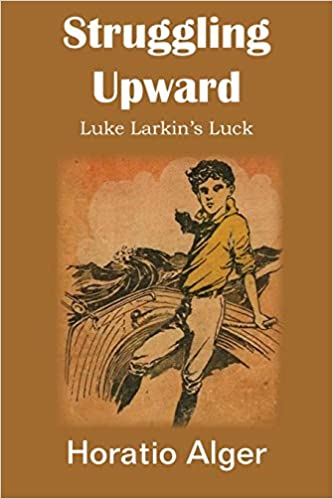
And finally, the “goody two shoes” nature of some of Alger’s heroes became more than some people could bear.
So What’s the Bottom Line of This Story?
Well, as I intimated earlier, I may be like many of you—I sort of fit the Horatio Alger bill.
I started off a poor farm boy. I emulated, as much as I could, the characteristics of Alger’s heroes. I worked hard, and tried to make my own opportunities. And, along the way, I had several benefactors (No, they did not bequeath me a pile of money, but they gave me valuable life-changing help, just when I needed it.)
And my stepfather used to say that if I fell in the lake, I would come out with my boots full of fish. I guess I have to admit that I had some good luck along the way too.
Finally, I feel fortunate that the conditions of my lifetime made it possible for a lot of us to find our way out of the lower economic class.
Who knows whether it helped me to read the Horatio Alger’s books?
I believe so, but I don’t know for sure. But at least I’d like to think it didn’t hurt.
My 80 Years With Guns
Before we go any further, I’d like to confess that when I was eight years old, before I had any interest in girls, I was very interested in guns.
Wasn’t everybody?
I lived on a farm about two miles southeast of Weldon, Illinois. My dad had a Winchester 22 rifle, and a 12-gauge shotgun. And most of our adult neighbors, as well as some of the older youth, had guns.
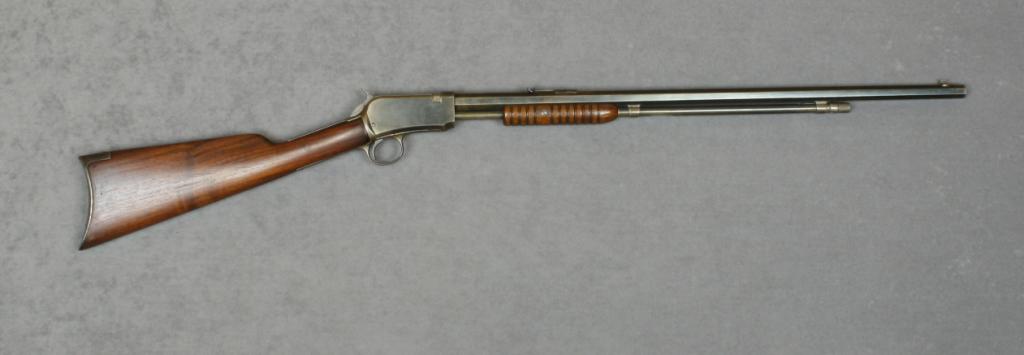
My fad’s Winchester 22 rifle.
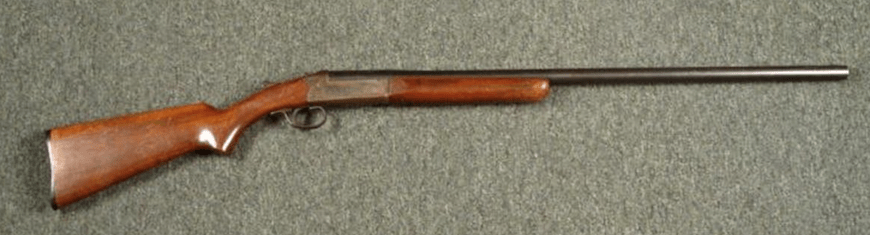
My dad’s 12-gauge shotgun.
Guns, without a doubt, were a large part of our farm culture.
Recently, with all of the violence involving guns, I’ve been looking back on my gun experiences, and trying to figure out why guns played such a prominent role in our rural society, and why I ended up with my current attitudes toward guns.
My Father, and Guns on the Farm
My dad didn’t glamorize his guns. He just used them for things he thought needed to be done around the farm — to kill an animal for butchering, kill a live skunk that had gotten into his trap on his trap line, “put away” a horse that had become irreparably injured, protect his family when an unsavory group camped under the dredge ditch bridge (threatening harm or theft), or scare off that proverbial “fox in the chicken house.”
And yes, he shot rabbit, pheasant, and squirrel to provide food for his family.
Beyond that, I remember those fun Sunday afternoons when our relatives came to visit and we had competitive target practice by shooting cans off of fence posts with the rifle.
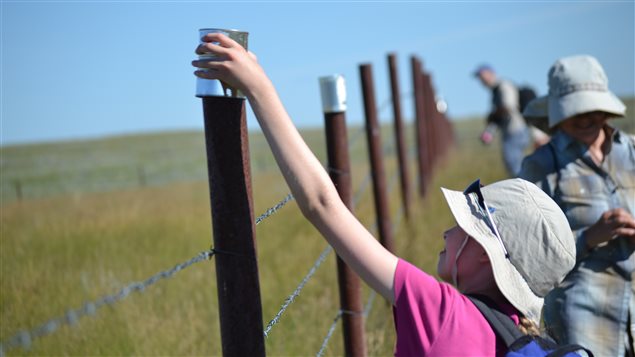
Setting up for target practice.
All this involved a healthy respect of the guns, and attention to safety. I was taught at an early age that “a gun is not a plaything.”
My Early Experiences With Guns: The Pretend Stage
About as early as I can remember, I had heard stories about “cowboys and Indians,” and loved to pretend I was one of them. (I recognize the prejudicial basis of these stories and games, but will talk about them in order to depict accurately what was going on “down on the farm” when I was a kid.)
And make no mistake about it; cowboys had (you guessed it) guns. We soon found out that Indians sometimes had guns too.
Dressed like cowboys and Indians, with broomsticks as our horses, and lots of verbal sound effects for our wood stick guns, we chased each other all over the barnyard, letting our imagination run wild.
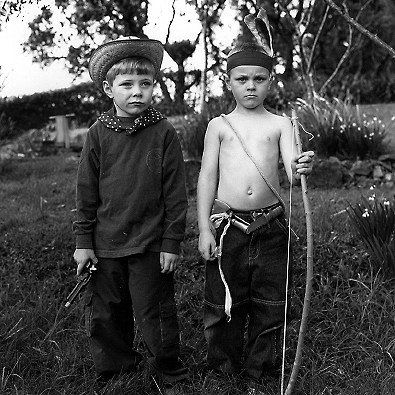
Kids playing “cowboys and Indians.”
A little later, still in the pretend gun stage, I crowded together with the boys behind the outdoor toilet at one-room Prairie View school, and we (in secret) decided we were going to each make a pistol carved out of wood and bring it to school.
I really wanted to do well, but even with my father’s help, we were no match for the creative Carr family (my second cousins) who brought in carved wooden pistols that no doubt would have taken first place at any county fair.

A carved pistol like the Carr kids made.
Two additional events occcurred, unsolicited, to heighten my interest and intrigue with guns.
First, when I was about eight years old, in order to attract customers, the merchants in Weldon began showing outdoor movies uptown on Wednesday night. And yes, you guessed it. Most of them were Westerns (Tom Mix, Ken Maynard, etc.) and they all involved guns.
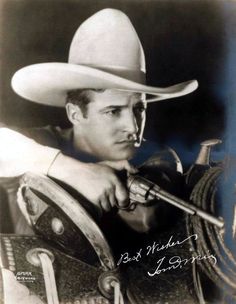
Tom Mix, Western movie hero.
Second, the advent of World War II ushered in a new interest in guns.
All kinds of guns were touted — from rifles to cannons, to guns from the turrets on airplanes — providing real fodder for my gun-related imagination.

World War II howitzer.
It was as somebody had decided to propagandize the kids that lived around Weldon with the lore of guns.
Moving from Pretend to “Sort of Real”
To fulfill what seemed to be a growing boys need at that time to have a “real” gun, we made our own rubber-band guns, and lucked out when someone gave us a pop-gun (which used air to force a cork out the barrel with sufficient speed).

Homemade rubber band gun.
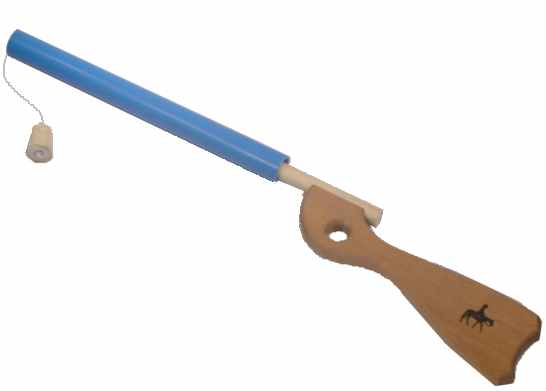
A toy pop-g
I well remember my first pop-gun, and its fate. My sister, who is four years older than me, had a friend visiting her. My reaction to them ignoring me was to shoot them with my pop-gun.
When my mother discovered this chicanery, she promptly cut a branch from the peach tree, swatted my legs all the way to the outdoor toilet, and witnessed my forced dropping of the pop-gun into the toilet. Later, I spent a good deal of time trying to get it out, but to no avail.
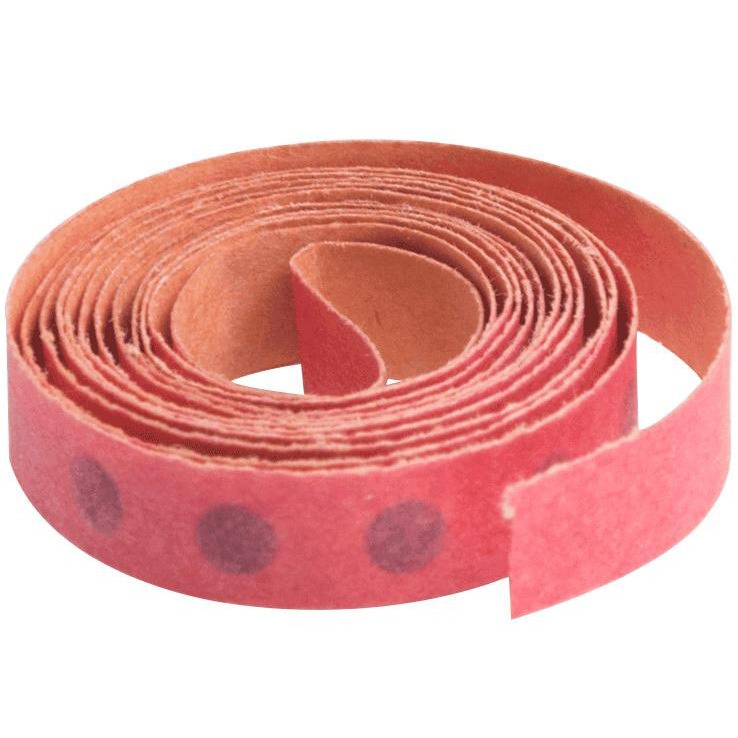
We also had great fun on the Fourth of July with our cap gun pistols. (Each little gray circle on the roll of caps contained a small amount of gun powder that popped when struck by the hammer of the gun.)
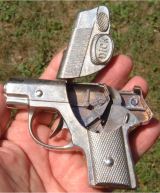
A cap gun, with a roll of caps to put in it
And then there was the BB gun. Given how poor we were, and the lack of support from my mother (who said, more often than I liked , that “you could put your eye out with a gun like that”), I still can’t remember or believe that my parents gave me a BB gun, but evidently they did.
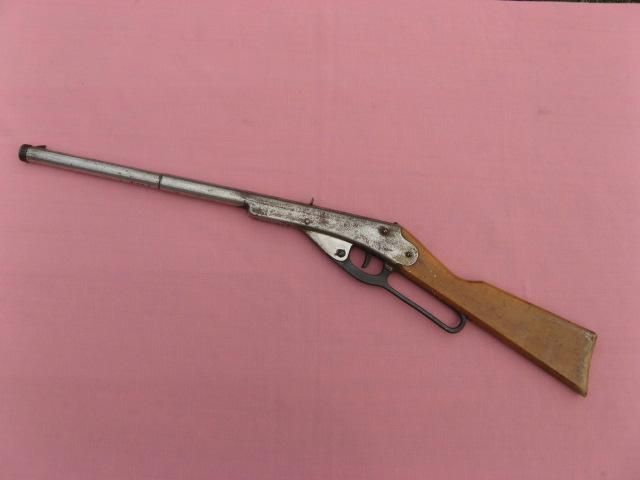
Looks like my first BB gun.
Today it seems to me that my childhood ability to shoot and kill a sparrow with the BB gun and not feel any remorse was a deficiency in my education about reverence for all life.
Then, it was the excitement and power that came from just being able to do it. It must have been satisfying, because I killed a lot of sparrows (as well as mice, snakes, rats, and ground squirrels) with my trusty BB gun.
My parents (with my mother occasionally dragging her feet) gave me the impression that it was an okay thing to do.
And Finally, the Real Thing
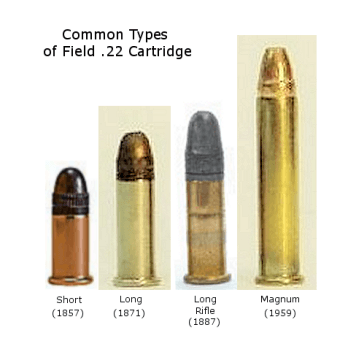
I think I must have been around 11 years old when our Winchester Model 1890 rifle essentially became mine. If “possession is nine-tenths of the law,” it no doubt was, because I was using it (in one way or another) what seemed like all of the time.
It did everything my BB gun did, only better. I used it to hunt rabbits in the snow, shoot snakes (from an advantageous position on the bridge) who were sunning themselves on rocks in the dredge ditch, kill squirrels for us to eat, and for target practice.
I even got lucky one time and killed a pheasant taking off, with the rifle.
As for the 12-gauge shotgun my father owned, it had a little too much “kick back” when I was 11, and made my shoulder hurt. But, around 13 years old, I started using it to hunt pheasants with my dad and other relatives and friends.
Moving To Adulthood
If you guessed that all the shooting I did when I was a kid served me well when I was in the Army, you would be right.

A U.S. Army M-1 rifle.
My target scores when we were learning to use the M-1 Rifle were among the best in our platoon. My grouchy Sargent found a way to take credit for me being such a good shooter, and never once attributed it to me.
It seemed that adulthood drew me to continue my “involvement” with guns. After my father was killed in a farm accident, I kept the Winchester Rifle, which had been owned by my grandfather, my father, and me. I broke it down, and put it in a drawer, along with a few shells in a plastic box.

The culture of my early adulthood seemed reminiscent of those Wednesday night movies when I was a kid, when two of the earliest shows on that new thing called “television” were “Gunsmoke” and “Have Gun, Will Travel.”
There seemed to be no end of the attempt, through all means possible, to glorify guns.
As the years went by, my involvement with that treasured Winchester rifle changed, actually decreased, but never quite ended.
On one occasion, I found out that the father of my daughter’s boyfriend seemed to know a lot about guns. He told me that I could improve the looks of the gun by getting the barrel blued. (Bluing is a method of treating a gun barrel to turn red iron oxide (rust), into black iron oxide. The blue-black appearance of black iron oxide improves the looks of the barrel, and is why the process is called “bluing”.)

A pistol that has been blued.
I let him talk me into doing it, but afterwards learned that by bluing the barrel, I’d pretty much eliminated the antique monetary value of the gun. Oh well, live and learn.
On another occasion, living on Gregory street in Normal, Illinois, I was under a lot of work pressure. To add to it, every morning at five a.m., a woodpecker would peck loudly on the downspout just outside my bedroom.
I tried everything.
I put up little whirligig propellers, brightly colored and noisy, to scare said woodpecker away. I got ear plugs. I even prayed for the woodpecker to leave for greener pastures.
But one morning, when I hadn’t slept well and was trying to catch some winks before facing what I knew would be a horrendous day, the woodpecker was at it again.
Sleepily, I went to the drawer, put the rifle together, and put in a shell.

My Winchester rifle, ready for a shell.
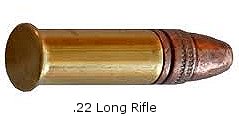
The woodpecker had flown to the top of a big tree in our front yard. As I looked north past the tree, I noted that the University farms stretched for a mile, so a shot would be safe.
So M-1 Specialist O’Daffer took aim, and shot the woodpecker. Placing it in the garbage can, with guilt mollified by my childhood experiences with sparrows, I crawled into bed and was soon fast asleep.
End of story, not.
That afternoon, my two elementary school daughters somehow found the remains of the woodpecker in the garbage can, and invited all their friends in the neighborhood to view an open casket. Needless to say, my reputation in the community was somewhat sullied.
And finally, I confess that I put the gun together on a couple of other occasions.
Unable to shake the idea that a part of growing up is experiencing a gun, I took my son to a dredge ditch, and we did a little target practice (with me secretly hoping that maybe a snake would come along).
And I did the same for my grandsons. I recall that my daughters and granddaughters didn’t show much interest when this activity was mentioned. Perhaps they sensed that in that age, guns were a “man thing.”
The Last Phase
When I was about 80 years old, and getting ready to move into the Luther Oaks senior living community, I became aware that my Winchester rifle would not be welcome in my new home. Having blued the value out of it, I couldn’t sell it for much as an antique, and, anyway, didn’t really want to “remove it from the family.”
So my son Eric agreed to keep it. I had to go through a gun store to legally mail the rifle to Sammamish, Washington. When it got there, Eric stored it in his neighbor’s gun case. Later, he found he couldn’t legally do that, and it found its way, fully registered, back to his closet, where it resides today.
The Final Analysis
There is no doubt in my mind that living on a midwest farm in the 1930s, 1940s, and even the 1950s was living in an age of a fading “old west” culture, where you just about had to have a gun.
Not only did you think you needed it, but I would argue that it, like the muscle or sports car, it was somehow part of your manhood.
While I grew up in this mild “gun culture,” I spent the rest of my life easing my way out of it, never totally succeeding, but certainly changing the emphasis.
So let me review my 80 years with guns.
- At six I was pretending to be a cowboy or Indian with a gun.
- At nine, I was shooting every small animal that got in my way with a BB gun.
- From ages 11-24, I was hunting rabbits and pheasants with a rifle or shotgun.
While in college, I read Albert Schweitzer’s book, “Reverence for Life,” and never thought about killing animals the same again (Schweitzer’s point of view could be stated as “never destroy life that breathes, unless it is unavoidable.”)
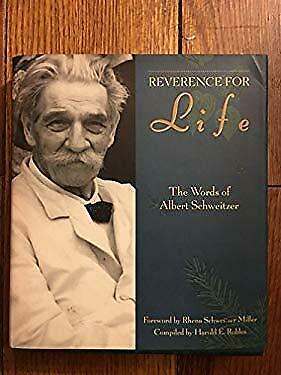
Albert Schweitzer and his book, “Reverence for Life.”
After that, the closest I came to hunting an animal was with a camera on an African Safari about 10 years ago. Today, you couldn’t get me to hunt and kill animals. It just wouldn’t seem right, unless it was for life sustaining food.
And yet, I respect those who like to hunt responsibly, and appreciate the value it has in keeping certain animal populations under control.
And while I still find guns moderately interesting, and I’m happy we have an old rifle in our family that was owned by four generations, I am not looking to expand my gun collection.
I still think target practice is fun, and don’t have anything against it as a sport.
But, somehow, the violent gun related deaths of too many school children have taken the edge off of the fascination with guns I felt in my early years.
And for the life of me, I can’t bring myself to accept the idea that assault weapons, or any guns with high capacity magazines have a legitimate role to play in any of this.
And I pray for the day that we wake up, and everyone accepts the need for more responsible rules regulating the acquisition and use of guns in our society.
A New View of the Miraculous Honeybee
 Maybe you are like me. I was scared to death of bumblebees when I was a little boy and still try to avoid them if I can.
I didn’t really like honey bees either, but they weren’t as scary.
And when I was a kid, I was quick to smash a bee of any kind if it invaded my space. In short, I didn’t have much time for bees.
But after recently finding out more about them, I now believe honey bees are totally amazing. They have been around for over 300 million years, and you can still find out something new about them everyday.
So, to reopen your door to the world of the Miraculous Honey Bee, I want to present my top five “Amazing Things About Honey Bees!”
Amazing Thing 1: The Miraculously Evolved Worker Bee
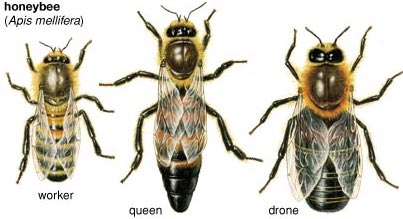 The worker honey bee has evolved into a pretty amazing creature. It is about ½ inch long — half the size of the queen bee — weighs 1/10 of a gram, and has a brain the size of a mustard seed. She lives only about 42 days, and does literally all the work in the hive. In addition, she spends the last 10 days of her life foraging for nectar, probably collecting no more than one tablespoon, and miraculously changing it into honey.
And let’s look at how amazingly well equipped she is to do what she does. The number(s) in each comment refers to a part of the diagram below.
- To feed larvae so they will grow into a Queen Bee, she has a Royal Jelly Gland (1).
- To smell, hear, taste, feel, navigate to get nectar, and care for her hive, she has two wonderfully versatile antennae (2).
- To see flowers, navigate via the sun, and use ultraviolet light, she has 5 special eyes, two of them with 6000 little photosensitive lenses, and hairs on them to help her navigate in windy conditions (3).
- To suck nectar from flowers, taste, and transfer food, she has a very versatile tongue (Proboscis)(4).
- To fly quite a ways to get nectar and fly back with a heavy load, she has four special wings (5).
- To carry nectar she’s collected back to the hive, she has a special honey stomach that holds half her weight in nectar (6).
- To carry pollen she’s collected back to the hive, she has pollen baskets on the back of her hind legs (7).
- To supply wax to make honeycombs, she has 8 wax glands (8).
- To protect the hive from intruders, she has a stinger and venom sac (9).
- To collect pollen from flowers, she has three million hairs on her body (10).
- To help her make honey from nectar, she has some enzyme glands (11).
- To help her emit odors (pheromones) to communicate, she has 15 additional pheromone glands (12).

(Note: Click on diagram to enlarge. Click on left arrow in the top menu to return)
How did this perfectly equipped honey bee happen? A mystery for the ages!
Amazing Thing 2- The Love Life of Bees
Back in the day, popular songs, like this one by Dean Martin and Jerry Lewis, made out that the love life of bees was pretty special, and humans could learn some lessons from them.
I hate to disappoint any of you who believe this, but I’m about to throw a pretty soggy wet blanket on that idea.
In the “love life” of honey bees, the Queen is the only female that mates! This specially anointed female, mother of all the other females, flies out on a single little 20 minute trip, mates with around 10 males—while flying in the air no less– and spends the rest of her life using their sperm to fertilize 2000 eggs a day.
She never mates again. And every male, after mating the first time, is viciously rendered not capable of mating again, and dies.
It’s a pretty bleak love life, but it serves bees well. It keeps the number of drones manageable, and produces enough worker bees to make all the needed honey and do everything else.
But take my word and don’t look to the bees for quality love life advice!
Amazing Thing 3 – The Way They Build Honeycombs
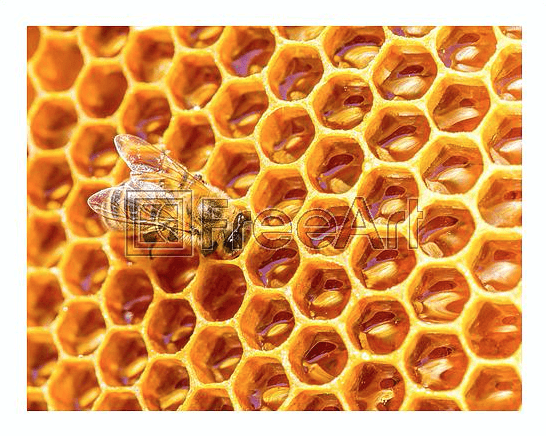 When they are between 10 and 20 days old, the worker honey bees prepare to make honeycombs by first becoming wax-making machines.
They just start eating honey, which is digested and converted to wax by eight wax glands in their abdomen.
The wax then oozes through the bee’s pores, and appears as flakes on their outer abdomen.
The bees then chew the wax flakes off of each other, continue chewing until the wax is moldable like clay, and then use it to build the honeycomb.
Somehow, centuries ago, bees discovered that a hexagonal honey comb can have the same capacity as a triangular or square honey comb, and it takes less wax to build it.
We will probably never know why or how, but the bees begin building the hexagonal honeycomb by making stacked cylinders, and allowing the spaces created when they didn’t quite fit together to be filled with wax. See “At the Start” photo (a) below.
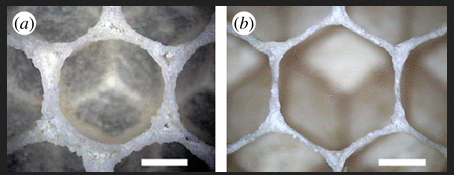
At The Start After 2 Days
Using the heat from their bodies, and their bodies as tools and measuring instruments, they melt and expand the wax between the cylinders to form the sides of the larger hexagon shaped honeycombs in the “After two days” (photo b).
So the fact that these short-lived little worker honeybees do build a perfect hexagonal honeycomb with wax they make themselves is, without a doubt, an “amazing thing.” I still don’t see how they do it.
Amazing Thing 4 – How They Communicate
In 1973, Karl Von Frisch received a Nobel Prize for his discovery that bees use a waggle dance to communicate with each other. Check out this video to find out about the Waggle Dance.
https://youtu.be/LU_KD1enR3Q
So, let’s review. A honey bee discovers a new food source more than 150 meters(1 ½ football fields) away, returns to the hive, and does a Waggle Dance to tell other honey bees exactly how to find it.
The duration of the dance tells how far away the source is, and the angle the bee dances to the suns vertical shows the direction to the flowers.
The honey bee dance is an amazing example of honey bee communication, but their communication using their sense of smell is even more extensive.
As mentioned earlier, honey bees use pheromones (chemical substances secreted by the bees exocrine glands and smelled by other bees) in all aspects of their life. It is the most important way in which bees communicate.
For example, the queen bee emits a pheromone (odor) that tells the hive all is well with her, and discourages workers from laying unfertilized eggs. A drone emits an odor to tell fellow drones its time to congregate at the mating sight. And the worker bees emit an odor that signals that they have stung an intruder.
Worker bees have 15 known pheromonal glands in all. What an amazing way to “talk!”
Amazing Thing 5– The Scientific Value of Their Sense of Smell
In photo b below, the bee’s antennae look like a couple of little twigs sticking out of its head. If we stop there, we miss an awful lot.

The honey bee’s antennae have 170 odor receptors, providing the bee with a “nose” that is 100 times more sensitive than humans, and 50 times more than a dog.
This makes their ability to smell so sensitive that they can detect a trace of scent in flight. And bees are able to recognize odors that are as faint as only two parts per trillion in an air sample (the equivalent of finding a grain of sand in a swimming pool).
So we shouldn’t be surprised that scientists have harnessed the honey bee’s phenomenal sense of smell to detect and track down explosives hidden by terrorists.
But how do they do it? Prepare to be amazed!
In photo c above, you see the bee’s proboscis, which the bee uses to suck nectar from a flower, and which also plays a key role in the bee’s detection of explosives. It works like this:
If you hold up sugar water (to bees), they automatically stick out their proboscis. This is called the bee’s Proboscis Extension Reflex (PER) I call it the bee’s “per-ing”
By mixing a bomb chemical with sugar water and then presenting the mixture to the bee, the researchers can train the bees (in no more than two hours) to also stick out their proboscis when they smell only the chemical.
Scientists say the honey bees have proved to be more sensitive in explosive detection than sophisticated man-made devices, detecting odors their devices cannot (such as detecting TNT in motor oil).
As another example of a use of a bee’s acute sense of smell, Medical researchers found that bees can be trained in 10 minutes to detect the odor of early stage cancer. Bees are placed in a glass chamber, and a patient blows into the chamber, as shown in this photo.

If the bees detect the cancer smell, they start per-ing. This works with several other diseases too.
No wonder researchers recognize the honey bee as one of the world’s most useful and amazing creatures.
Concluding Statements About Honey Bees
 I sure wish I had space to give you my “Top 20 Amazing Things About Honey Bees.” If I could, I would tell you, along with several other things, how a third of our food is dependent on the amazing process of bee pollination.
I would wax eloquently and tell you about research that has shown that honey bees understand numbers, can count to four, and have a usable concept of zero.
I would also tell how the techniques honey bees use to forage for nectar have served as a model for utilizing computer internet servers that has saved the computer industry millions of dollars.
The fact that pesticides, mites and viruses, and loss of habitat have caused honey bees in the United States to die off at an unexpected rate, have caused scientists to revisit the quote by Albert Einstein below.
Even though Einstein’s quote may be a bit exaggerated, it brings up an important idea.
Honey bees help us, so lets look for ways to help them!

The Amazing One-Room School – Revisited
In March, 2015, I had a great time writing about my life-changing experience in a one-room school, and extolling it’s virtues.
I invite you to review that post, as background.
Since then, I’ve found out what a big deal the one-room schools were, and what a great impact they had on our nation. Here’s the story.
Why And How Did One-Room Schools Get Started?
Barbara Bush, in the preface of the book America’s Country Schools, explained the “why:”
“…The pioneer families settling America’s vast frontiers understood one of Thomas Jefferson’s most deeply held convictions- that good education is the essential foundation of a strong democracy…”
And the “how” came from a Government Land Ordinance brought into being by Jefferson in 1785.
It provided for surveys that divided the land into counties, townships, and sections, with section 16 in every township set aside for education.

TOWNSHIPS, usually made up of 36 square mile SECTIONS. My COUNTY contained 13 TOWNSHIPS
It was the revenue from these “education sections” that allowed states to create independent school districts and a system of free public education.
Because the people in communities voted to have a school, decided where it was built, and controlled its use, a deep sense of community and pride developed around the one-room schools.
This closeness and bonding in small communities across the land had a tremendous influence on the development of this nation.
How Many One Room Schools Were There?
When I walked in the door of Prairie View School in September, 1939, I thought I was one little kid entering first grade at my unique little one-room school.
All you have to do to see that Prairie View school was not unique, is to look at it (small blue arrow) and all the other one room schools (small orange squares) on the map below of DeWitt County, Illinois, below. (Click on the map to make it larger. Click on the left arrow at the top of the screen to return to the post.)
There were 7 one-room schools in Nixon Township where I lived (blue outline), and 90 one-room schools in DeWitt County!
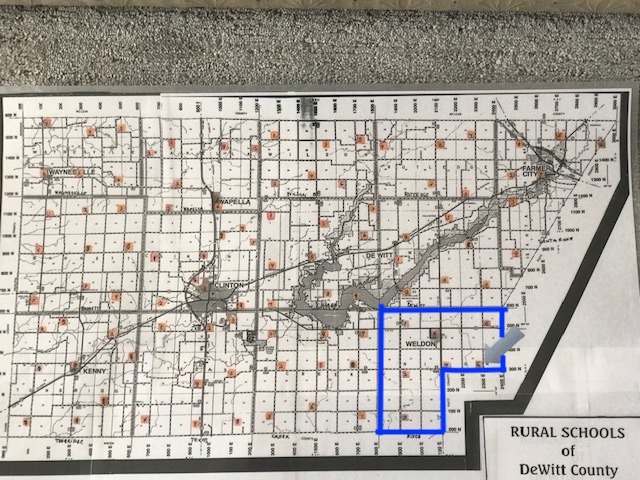
DEWITT COUNTY, ILLINOIS. 13 TOWNSHIPS AND 405 SQUARE MILES
There are 102 counties in Illinois, most of them larger than Dewitt.
So it is easy to estimate that there were around 10,000 one-room schools in the State of Illinois.
At the peak of the one-room school phenomenon, it was estimated that there were over a quarter of a million one-room schools in the United States. My little unique school, indeed!
A Tidbit Of One-Room School History
Just after the Civil War (1865), The One-Room Little Red Schoolhouse was very popular, and became a national icon.

A well-known newspaper said, “Next to the Flag, the Little Red School House is a significant sign of our country.”
But before the Little Red Schoolhouses got a good head of steam, an influential lady from Georgia said that, no matter if red paint is cheap, we should paint our schoolhouse like our house, not like our barn. And so, in the end, only 2% of U.S. schoolhouses were red.
However, this icon was not to be disposed of so easily, and became the Impetus for a “The Little Red Schoolhouse” song (1922) and movie (1935). Click the arrow to listen to the song:
So it’s no wonder that a Secretary of Education would later use the Little Red Schoolhouse as a symbol for the government’s “No Child Left Behind” program.
What About One-Room School Teachers?
At first I thought “What a coincidence!” Both my mother and my mother-in-law were one-room school teachers.
For that matter, so was my cousin Cherry, my good friend Evelyn, and several other women I know. And they were all between 16 and 21 years of age when they taught.
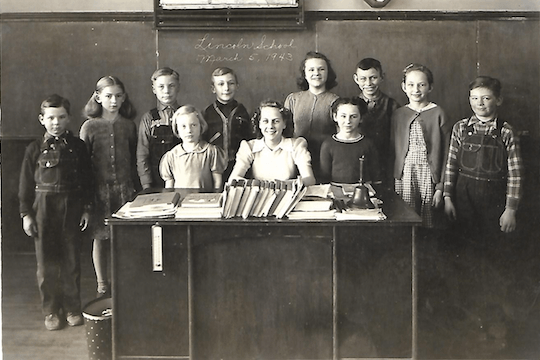
My Cousin, Cherry Jackson, Lincoln School, 1943
But come to think of it, there were 100,000 one-room schools in the broader Midwest alone, and each one had to have a teacher. But why were they all very young women?
Perhaps these two “rules for teachers” for one-room school teachers in 1915 will help you draw your own conclusions as to why many women one-room school teachers were so very young:
- You are not to keep company with men.
- You will not marry during the term of your contract.
Also, female teachers had proved they could handle the 8th grade boys, and they were cheap to hire, compared to men. So as we entered the 1900s, almost 85% of the one-room school teachers were women.
And these women were expected to be exceptional teachers, superb disciplinarians, experienced nurses, insightful counselors, their own janitors (fire the stove up every morning, carry in coal and wood, clean the floors, etc.), record keepers, school administrators, and lead extremely pious lives to serve as virtuous examples for their students and community. And all this for $60 per month (for 8 months, in 1915).
And, surprisingly, more often than not, they met these stringent expectations!
As author Wayne Fuller so aptly put it, “at the crossroads of the nineteenth and twentieth centuries, it was largely an army of young women who went out to slay the dragon of ignorance throughout the Midwest.”
And when I ponder again the fact that over 100,000 of them were on the job in the Greater Midwest alone (and a quarter of a million in the U.S.), I can see how they can be credited with positively changing the nature of our communities and our education system forever.
It was totally a very big deal — an unbelievable phenomenon!
How Did It (Should It) All End?
As we moved into the 1900s, some people thought that the one-room schools were the greatest thing since sliced bread. So they quietly used innovative approaches like group learning, meeting individual differences, learning through projects, etc. to help the 15 kids in an average one-room school really learn, and enable them to be a happy family that got a lot of attention from an excellent, loving teacher.
Other people became involved in massive nationwide educational and political arguments supporting the beliefs that in the one-room school teachers were not well trained, the teaching was rote and stilted, one teacher couldn’t handle every grade, classroom materials were lacking, and facilities were in a state of disrepair.
This second group of people won the day, and by 1938 (a year before I went to Prairie View), 19,000 one-room schools had been abandoned in the Midwest. I almost missed the one-room school boat!

Abandoned One-Room Schoolhouse
And by 1960, 13 years after I left Prairie View, there were hardly any one-room schoolhouses left in the country! Less than 1% of all students attended a one-room school at that time.
So for 150 years, one-room schools played a major role in cementing communities, furthering democracy, and educating a larger percentage of the student population than in any other country in the world. Then, seemingly in a blink of the eye, they were essentially extinct.
Give Credit Where Credit is Due
Today, we look back on the one-room school era, and give credit where credit is due for the efforts of communities and teachers in educating the children of our country (including me, I might add).
Sure, some of us sometimes find ourselves engulfed in Nostalgia, and a yearning for the Good Ole Days.


But then we look at some of the wonderful things happening in our schools today, and know that changing times require educational innovation.

As a couple of wise people once said, “Nothing is probably as bad or as good as we perceive it.” And, “There is more than one way to skin a cat.”
I guess we could hang our hats on that!
What do you think? Post a comment in the box below.
A Look Back – Not an Ordinary Day
The following is a minor adaptation of a post that was originally published as a guest post in November 2016 by Phares O’Daffer on Sara O’Daffer Marberry’s “The View from Here” blog.

Phares O’Daffer, Cubs fan since 1941.
As I woke up on November 3, 2016, and shook myself out of my pretty much dazed condition, it began to dawn on me that this was not a normal day.
For 75 years as a Cubs fan, I have awakened on a certain day in late October or early November, sleepily reciting the time-worn phrase, “Oh well, wait ’till next year.”
But on November 3, 2016, all I could say, over and over, was “THE CUBS HAVE WON THE WORLD SERIES. THEY ARE THE WORLD CHAMPS! “
Gone was any thought of a Billy Goat, a Black Cat, a Bartman, a Veiled Curse, or any other such outside manifestation.
It was a WIN, pure and simple, and it had come all from inside the Cubs organization of managers, players, and fans.
“But how did it happen?,” a die-hard Cubs fan like me is bound to contemplate. And the answer is literally amazing.
It came from an owner who had the foresight and guts to not want to accept mediocrity any longer.
It came from a general manager and business manager who relentlessly pursued a vision and a plan—letting nothing get in their way.
It came from a creative team manager, who knew how to work with a team of young men and make high-level baseball fun—and who thrived on doing things differently and trusting in his players.
It came from a lot of people in farm team leadership who knew how to bring young players along—developing their skills and leadership.
It came from a lot of things you can hardly believe, like hiring a premier, highly paid pitcher from Boston who couldn’t throw a pick-off ball to first base, and who demanded to have his own personal catcher.
But a guy who ultimately pitched so darn well that he didn’t need a pick-off play, and whose catcher, a 39-year old journeyman they called Grandpa Rossy, became a clubhouse leader and a darling of all the fans. And who also seemed to surprise everyone by hitting home runs, even in the 7th World Series game when the team needed a pick-up the most.
It came from a bread and butter player from Eureka, Illinois, who transferred from the Kansas City Royals, and had a miracle bat about all year. He didn’t care where they played him; he just wanted his team to win. And he banged out the double in World Series game 7 that won the game for his team.
It came from a guy who was headed for the Baltimore Orioles from free agency, but who woke up one morning saying, “I want to play for the Cubs.” He just appeared at the Cubs workout and all year played impeccable center field and was the Cubs’ greatest lead-off batter in years.
It came from a couple of MVP candidates, a first and third baseman, who were skilled and mature way beyond their years, inspired their teammates, and who had this uncanny ability to somehow get a hit when you really needed it.
It came from a bunch of young kids, still green behind the ears who became a great shortstop, a great second baseman, and a great catcher. Sure, they hadn’t quite learned to handle curve balls perfectly, but they had several hits and some home runs at the right times and were nearly perfect at everything else.
And it came, the most unlikely scenario, from a player who destroyed his knee on the second day of the season, condensed an 8-month rebuilding session into 6 months, and miraculously became available to be a designated hitter in the World Series, getting 4 hits and a couple of walks.
And it also came, unlikely as it was, from an outfielder who was a defensive whiz, who hit .296 with the St. Louis Cardinals the previous year, but who couldn’t hit the broad side of a barn in 2016 and had gone 0-3 in game 7.
But who, in the ebbing stages of World Series Game 7 when it looked like the Cubs had thrown momentum to the wolves, disregarded his horrific batting, and personally called a team meeting during a short rain delay. He somehow moved them to get back to their basics, to remember their goals and what had made them successful, and inspired them go out and score two runs in the 10th to win the game.
Most importantly, it came from a bunch of selfless players who liked each other, had each other’s backs, and who played all year with grit and a never-give-up attitude. And who, by all reports, were also pretty good guys.
And finally, it came from Cubs fans of all kinds, like the lifelong fan shown above, who followed the Cubs, win or lose, and never ever, ever, ever gave up on them.
It was a tremendous ride and I sure learned what it means to play with heart and give it your all.
Yes, it was not a Normal Day—for sure not a Normal Year. And for that, I am eternally grateful.
The Cubs won the World Series!
P.S. Now (2019), let’s do it again!
My Favorite Animal Stories
Knowing that I grew up on a farm, you’d think I’d include stories about farm animals in my “favorite animal stories.”
You might also think that the stories about the first time I helped castrate hogs or deliver a new calf would be high on my list of favorites.
And you wouldn’t be too far off to expect that some of my threatening farm experiences like running from a mad bull, coping with pursuing hissing geese, or confronting a snarling opossum in a workbench drawer might provide fodder for a favorite story or two.
And what about riding with my dad when he farmed with horses, shooting a snake on a rock in the dredge ditch with a BB gun, and enjoying my mother’s reaction when I left it on the back door step?
And then there’s chasing a fox out of a chicken house, catching a skunk in a trap, or even Harriet and I trying to get two chipmunks out of our house. All candidates for fun animal stories.
And yet, when I really came down to choosing my favorite animal stories, they surprisingly did not come from the farm, but from experiences Harriet and I had on trips to different parts of the world.
Just for fun, here are five of them.
1. Elephants Galore
On a safari trip we took to Kenya, Africa, in 1995, it was birds vs. elephants, and birds almost won. But not quite.
Another couple on the trip, who were bird experts, and who we called “Birdman” and “Birdie,” had come to Kenya for one reason and one reason only — BIRDS!
Top of our list, of course, was — ELEPHANTS!
We were heading back to camp, having been on our safari in Amboseli, Kenya, for two days. Birdman and Birdie had seen a lot of birds, but we had been skunked in our search for elephants.
“Look!” someone shouted. And this video we took explains the rest.
(Click on the arrow on the photo to start the video. Click the curved arrow at the end to replay. The video goes back to its original starting place when you leave the post.)
Because of El Nino weather patterns, 400+ elephants were migrating en masse to a different area, looking for water — and we got to see them all!
During the amazing “elephant parade,” Birdman generally ignored the elephants, and had his eye on a White-Bellied Go-Away Bird.
And Birdie was emitting exclamations like, “Oh what a sweet little Bee-Eater Two on that elephant’s back!”
So, for Birdman and Birdie, birds were more exciting than 400 elephants. But for us — and this is the understatement of this blog — the elephants carried the day!

2. Cavorting Monkeys
Another favorite animal story comes from when Harriet I were in India in 1989.
We found that our scheduled hotel in Jaipur, India (The Pink City) was full. So, we had to take a room and eat in a third-rate hotel (only a little better than the one shown below), which left a lot to be desired.

After ill-advisedly devouring a large bowl of tomato soup, with gooey cheese, stale crackers, and gobby pudding like it was my last meal, I rubbed my satisfied tummy and tried to go to sleep.
About four hours into this “sleep,” with monkeys banging around outside our window, the action began, as related by the following three-time period narrative.

First Time Period
My perspective: I believe I am as sick as I have ever been. My body is divesting itself of everything possible, from every possible port of exit. Woe is me!
Harriet’s perspective : My husband is, here in the middle of the night, as sick as a dog. As a good wife, I need to help him. Oh brother!
The Cavorting Monkey’s perspective: Hey, there’s a light! Let’s cavort really loudly outside that window!
Second Time Period
My perspective: When this total chaos going to stop? Oh (expletive deleted), we’re out of toilet paper! What am I going to do?
Harriet’s perspective : Oh no! There is no-one at the desk in the middle of the night in this crummy hotel! OK Harriet, Don’t panic. Look for Kleenex, new or used, in the purse. Success!
Monkies Perspective: Let’s keep having a great, loud, hilarious time, just outside this window! Sexy time, coming up!
Third and Last Time Period
My perspective: Emergency over, used kleenex held out just long enough. I really need to get some sleep. Man, those monkeys are noisy!
Harriet’s perspective: Wow! What a mess. How are we going to get enough rest to drive all the way back to New Delhi tomorrow? What in heck are those monkeys doing?!
Monkeys perspective: Wow! Making whoopee is much better than cavorting! If we break that window, that’ll be even more sexy. Oh boy, what fun!
Well, morning came way too soon, and, in my dazed condition, I looked out the window and saw this very relaxed monkey sitting on the edge of the building. Bleary-eyed, I couldn’t see him very clearly, but I would have sworn that he was smoking a cigarette.

3. Yodeling Bear
This tale is about an event that happened on a trip Harriet and I took to Canada in 2003, stopping by Lake Louise, near Banff.
We started to hike the Lake Agnes trail up to the famous Lake Agnes Teahouse at 7:30 a.m. It was a two-hour hike up a pretty steep path, and with a lot of switchbacks.
To add a bit of intrigue, we noticed a sign at the entrance that asserted something like, “Bears have been sighted on this trail,” and there were no people in sight.

Harriet, worried about a bear, knew that if you make noise, say ring a bell, it is known to scare bears away (except for black bears).
She had also heard but avoided thinking about the joke that the way to tell a black bear from a brown bear is to open the stomachs of the two bears. The one whose stomach has bells in it is the black bear.
About half-way up, I detected that Harriet was getting more and more concerned about bears, so, being the dutiful, protective, macho husband, I asked her if it would help for me to yodel, so we would not surprise a bear.
I don’t know what went through her mind, but she must have weighed the negatives, and decided that me yodeling was maybe a little less threatening than being killed by a bear. So she agreed that yodeling would be okay.
I let forth a yodel (perfected by calling hogs on the farm) that would have either utterly charmed a Swiss lass, or totally destroyed her hearing. A yodel, for sure, intended to put the Fear of the Lord into even the bravest bear.
This video will help you get an idea of what the yodel was like. Sort of.
And, immediately after I yodeled, about two levels up on the switchback trail, came a much higher quality yodel in return. Harriet imagined it like this.

We never saw “the bear,” however, and had a wonderful time at the teahouse.
I guess “bears” like to play around a little too.
4. A Greedy Horse and Camel
On a trip to Egypt in 1989 with Herm and Evelyn Harding, we decided to get off the boat at Aswan and take a horse and carriage to the downtown area.
The Egyptian carriage driver, who had a Ph.D. in Dickering About Price, finally agreed that he would take us there and back for the equivalent of about $15 U.S. dollars, and that would include the tip, which they called “baksheesh.“ So off we went.

Upon return, we hopped out of the carriage, and as we were about to take our leave, the grinning driver held out his hand and said, in an innocent, but mildly demanding voice, “baksheesh?”
Ever diligent in sticking with the idea that “a deal is a deal,” I patiently explained that we had agreed that the baksheesh would be included in the agreed upon price.
“Oh,” he exclaimed benevolently, but in a powerful voice, “No baksheesh for me! Baksheesh for my horse!”
Needless to say, the humor of it all melted me immediately, and I succumbed to tipping the horse, no less. (More about him later)
A related incident happened at the Great Pyramid. Herm had dickered for what Evelyn thought was a lucky camel, and she was riding high.

The rub came in, however, after the ride was over. When it came time for Evelyn to disembark from the camel, the camel would not bend down so Evelyn could get off, and the driver told her she couldn’t get off without paying extra baksheesh.
Herm deliberated about the ramifications of Evelyn having to stay on that camel the whole trip but finally decided extra baksheesh was in order.
As I thought back on the two parts of this tale, I couldn’t help but think that the drivers were complicit, for sure, but that it was the laughing horse and smug camel who were the real culprits. I envisioned them as looking like this as we forked over the extra backsheesh!


5. The World’s Weirdest Bird
We met the world’s weirdest bird, a Blue Footed Booby, on a trip Harriet and I took to the Galapagos Islands in 2008.

First, we saw them dive, and that was weird enough. Keep your eyes on the boobys all through the video, or you’ll miss the dives!
Later, I read that their maximum dive can begin as high as the length of a football field, and they fold their wings into their body, transform themselves into arrows, and hit the water at 60 mph or more — going as far as 82 ft. below the surface.
Then we saw them dance, and that clinched their weirdness. We found out that this dancing
We found out that this dancing around (as if trying to keep their feet out of the mud) was a courting ritual, particularly the male trying to impress the female with his feet.
Maybe you’re like me. Sometimes I look back at a past event and I think, “I shoulda done that.”
And so it was with the Blue-Footed Booby Mating Dance!
I imagined what would have happened if, upon returning to our cabin after seeing the Blue-Footed Boobies do their dance, I had gotten Harriet’s rapt attention and done the dance in her presence!
I think it might have looked something like this:
In retrospect, even if I had pitched it as “renewing our marriage vows,” I can assure you, without a doubt, that the valiant attempt you have just witnessed would have been met with Harriet saying, “How in the world do you expect anybody in their right mind to take that seriously?” Oh well.
Kudos to our Animal Friends
In case these stories have been a little hard on the animals involved, I’d like to give reparation by presenting this quote which affirms them, and which expresses my feelings too.

And so “three cheers” for our animal friends! They enrich our lives.
It’s Just Soup
Sitting at a table at the Starbucks coffee shop at Barnes and Noble, I was startled when she stood behind me, put her hands on my shoulders, and said, “Close your eyes.”
Alert for a surprise, I turned, opened my eyes, and came face to face with an ample bunch of small leafed-greenery, growing in a pot.

A Pot of Cilantro
Somehow the idea of “pot” stuck in my mind, but it was Cathi bearing the gift, and remembering our conversation only a week before, I quickly came to my senses.
We were talking about how soup might be a good source of liquid for my wife, Harriet, who is having trouble staying hydrated these days.
I had glibly said, “Well, I will start making some good soups!” And Cathi, a very accomplished soup maker — and perhaps slightly taken in by my weak attempt to act like a soup maker myself — joined in support of the idea, making me feel like a compatriot.
So, in thoughtful follow-up, she brought me a very fine bunch of organic cilantro, which she undoubtedly thought would be an essential ingredient of those “good soups.”
Little did Cathi know that I had never made a soup (except from a packet or can) in my life, let alone a soup with cilantro.
In fact, I hadn’t even known what cilantro looked (or tasted) like.
So Where Do I Go From Here?
Heading home with a bunch of cilantro in the seat beside me caused a bit of consternation.
I had set myself up as a soup maker, and now had a benevolently bestowed bunch of cilantro that called my bluff.
Several scenarios went through my head.
There was the mental picture of me handing that cilantro to my friend Donna, who really likes to cook (relieving my guilt for wasting it), and then concocting a story for Cathi about the wonderful cilantro-laden soup I had made.
A more inherently honest mental picture was me opening a can of tomato bisque soup, and chopping that wonderful cilantro into it.
Voila! A soup with cilantro! I could extol its imaginary virtues to Cathi the next time I see her.
But after several less and less plausible scenarios like this, I decided I had to “face it like a man” (perhaps not a very appropriate admonition, given the aversion men had to cooking in my day) and actually make some soup!
Getting Started
Recalling that “when all else fails, Google,” I entered “recipe for a soup that uses cilantro,” and sat back to see what would happen.
Bypassing Carrot Chili and Cilantro soup and Lime Cilantro soup, I finally landed on Cilantro Potato Soup. (Click recipe to make it larger. Click the back arrow in the menu at the top to return to the post.)

Recipe for Potato Soup with Cilantro
Upon seeing the recipe, a problem reared its ugly head — I had absolutely none of the needed ingredients in the house.
So I spent a long time in the store looking for what I needed, and many dumb questions (yes, there is such a thing as a dumb question) entered my inexperienced head.
What is a “medium” potato or onion, what is a garlic clove (I saw three “balls” of garlic in a little net bag.) Did I need two bags? Let’s see, how many cups in 32 oz? Where do you find red pepper flakes? Do I need virgin olive oil, or not?
By the way, what is “virgin” olive oil?
Plunging In
OK, now with the supplies in hand, I was ready.
However, I was immediately hung up on “finely chopped” and “coarsely chopped,” as mentioned in the directions.
It didn’t work very well to try to “finely chop” the garlic and onion with a dull “sharp knife,” and I realized there wasn’t a “fine chopper” gadget of any kind In the house.
I started peeling the potatoes with a paring knife, and after a while recalled that there might be a potato peeler somewhere. I finally found it, and it helped.
Trying to follow the directions, “saute,” I recognized that the only meaning I had ever attached to the word was “heat up,” so I put the garlic and the onions together in a skillet, and turned on the heat.
At the same time, not quite understanding the recipe, I put some water in a pan and started heating up the “coarsely chopped” potatoes.
While stirring the potatoes, I noticed that in the skillet, some of the edges of pieces of garlic and onion were black. Quickly turning down the heat, I wisely concluded that perhaps a little butter in there would help.
It was about then that I realized that I wasn’t supposed to cook the potatoes ahead of time, so I shut off the heat and poured out the water.
Now I was really cooking, pun intended.
Following the Recipe
I popped the sautéed onion and garlic into the large pan of potatoes and poured in the chicken broth.
As the concoction was heating, I spent my time dipping little black pieces of garlic and onion out of the pot.
At the end of the heating, I took a careful look at the leafy, hardly edible looking cilantro, and wondered if I really wanted to put almost a cup of it in my precious soup.
But trusting Cathi, I carefully measured ¾ cup of cilantro and emptied it with reckless abandon into the hot pot.
And then came, in the directions, the unkindest cut of all.
“Use an immersion blender to puree.”
Now what in heavens name is an “immersion blender,” and if it’s what I think it is, how can I use it in a boiling pot of onions, garlic, potatoes, and cilantro?
Finally, after two hours slaving in the kitchen on a task I thought would take 40 minutes, I finally saw that I have been totally duped by the recipe!
Why in the world did I have to worry about finely and coarsely chopping the onions, garlic, and potatoes if I was going to puree the whole concoction anyway??!!!
Finishing Up
After the concoction and I finally cooled off, I ladled it into our blender and proceeded to puree.
It was at this juncture that I realized that I had not been told what to do with the olive oil. Mustering up my resourcefulness, I poured it into the concoction and pureed it with all the other stuff.
Balking at the pinch of red pepper flakes (I don’t like really spicy stuff 🙂 ), I declared the task done.
The Proof of the “Pudding” is in the Eating
It was with some trepidation that I prepared a bowl to try out — a squeeze of lime, some salt and pepper, heat, and an ample sprinkling of cilantro on top.

Cilantro Potato Soup
And now, most people would say to not spoil my dinner coming up in 15 minutes at Luther Oaks, but for me, it was SOUP TIME!
I proceeded to eat that whole bowl on the spot, without crackers!
(A wise soup aficionado once said, ”If a soup is high enough quality it doesn’t need crackers.”)
Later that week, after eating the third “leftover” bowl of my Cilantro Potato Soup (I didn’t notice that the recipe said “serves 8”), and serving it to Harriet (who ate several big spoonfuls and seemed to like it) and some other unsuspecting souls, I drew these conclusions:

The extra Cilantro Potato Soup.
- It was a pretty good soup. People, including me, really liked it. (Admitting bias, of course.)
- I am a new fan of cilantro. (I was told that some people think it tastes like soap, but not me. A great taste, as far from Lava as would be technically possible.)
- I am motivated. (By the taste, precisely. If I could regularly make a soup that tastes that good, I may become a soup maker yet.)
In Conclusion
Many thanks to Cathi, who gifted me the cilantro, and unknowingly nudged me into my exciting and rewarding soup adventure — reminding me again of the joy of trying something new.
Many thanks to the powers that be for somehow enabling me to pull off a concoction that was of reasonably good quality, and fun to eat. Yes, it was a concoction, for sure, but it was my concoction.
And as I enjoyed the last bowl in the batch, I had to keep reminding myself, “It’s just Soup!”
The Joy of Genealogy: People!
- At October 27, 2017
- By Phares O'Daffer
- In All Posts, Genealogy
- 0
As I walked out of the restroom door, preoccupied by it all, I bumped right into her.
She regrouped all 5’ 1” of herself, and straightened her blue jacket with the name “Alma Packer” on it.
As I noted the Church of Jesus Christ of Latter-day Saints Family History Library logo on her jacket, she was first to speak.

Jesus Christ of Latter-day Saints Family History Library, Salt Lake City, Utah
“May I help you,” she said with a smile. There was no doubt that she meant it.
I could have quickly said, “ No problem. I’m okay. I’m very sorry I bumped into you,” and walked on down the hall.
But for whatever reason—maybe it was because Alma exuded helpful motherliness—I found myself telling her all I knew about my German ancestors in Maryland, and about Johann Wolfgang Odoerfer, a German Hessian soldier I had discovered.
Finally, almost out of breath, I admitted I’d had absolutely no luck finding out where my ancestors came from in Germany, and had slipped out of a mathematics conference in Salt Lake City to come to this library to find some help.
Well, she said, seemingly four inches taller, “You have come to the right place!”
The Fateful Letter
Alma led me to the counter behind which she appeared to spend a lot of her time, and cut right to the chase.

Alma’s Desk at Family History Library
“Since you say your Hessian soldier relative Johann Wolfgang Odoerfer was in the Ansbach Regiment,” she said comfortably, “I would suggest that you write a letter to some of the main Parishes in and around Ansbach, to see if any Odoerfers still live in the area.”
With all the confidence in the world, she gave me her second big smile and proudly asserted, “And I can help you write the letter.”
And she did!
The first letter that Alma helped me write was to the Church in Oberferrieden, Germany, asking for information about Johann Wolfgang and his family and relatives.
The Serendipitous Moment
In some way, sending the letter made me feel like I had just thrown a bottle with a message in it into the sea, and might never hear from it again.
However, On April 11, 1991, I received a pleasant response to my February 20th letter from George Schmidt, representing the Oberferreiden Parish. However, he could come up with none of the information I had requested.
As the days elapsed into weeks, I had pretty much given up on receiving any information from any Odoerfer in Germany,
And then, on May 26, 1991, when I least expected it, another letter from Germany arrived in my mailbox. (Click on letter to make larger. Click on back arrow in top menu to get back to blog post.)

Gunda’s Letter
It was one of those serendipitous moments in genealogy that drastically changes everything.
I had earlier found that Odorfer was one of the versions of my name used by my Maryland German relatives, and now I had found some real live Odorfers in Germany!
I responded to Gunda, and several months later, I received the following letter from her brother Georg, with the addendum coming almost a year later.

Letter from Georg Odorfer

Georg Addendum
A connection had been made between Odorfers in Germany and O’Daffers in the United States!
What Happened From There?
During the years following the initial exchange of letters, an amazing amount of interaction took place among the Odorfers and O’Daffers.
From 1992 on, the following Odorfers visited the O’Daffers in the U.S:
Georg, Renate (Georg’s wife), Gunda, Georg2 (her husband), Astrid (Gunda and Georg2’s daughter), Jutta (Georg and Renate’s daughter), Reinhard (Jutta’s husband), Bastian and Julia (Jutta’s children), Iris (Georg and Renate’s daughter), Martin (Iris’s husband), Clara and Zoe (Iris and Martin’s children), and Enni (Iris and Martin’s dog).
From 1993 on, the following O’Daffers visited the Odorfers in Germany:
Jane (my sister), Arkie (Jane’s husband), me, Harriet, and Herm and Evelyn Harding (Harriet and my friends).
Here are some examples of the many memories from these visits.
Me jokingly telling Georg in 1992 to not to return to the U.S, until he had researched two more generations of Johann Wolfgang Odoerfer’s family, and him doing it in two months.

Georg and I.
George calling in 1993 and asking me to search motor home magazines for a motor home for him to buy to drive to South America and Alaska.
Jane and Arkie trying to figure out why the barn was so close to the house on their visit to Georg2 and Gunda’s beautiful homeplace in 1993.

Elke, Bastian, Georg2, Gunda (Jutta taking the photo?).
Gunda catching a miracle fish in 47 seconds at Lake Bloomington in 1993 when she and her husband Georg2 stopped by with Georg and Renate, who later drove to Alaska in the motor home.
Georg’s friend Helmut telling us, on our visit to Germany in 1994 that black was the symbol for conservatives in Germany, and that Georg was so black that if you put him in a totally dark room he would leave a shadow.

Helmut, and Harriet, right after his “dark room shadow” remark.
Me (using a plywood fish for a paddle) and Astrid (in full habit) beating Axel and Reinhard two out of three ping pong games on our visit to Germany in 1994.

Phares, Astrid, Axel, and Martin playing ping pong
Herm and Evelyn talking politics with Axel and Martin in 1994, with Axel illustrating just how far right Georg really was.

Herm, Evelyn, Martin, Axel talking politics.
Jutta’s children, Julia and Bastian, excitedly eating up the sights and sounds of downtown Chicago when they visited my daughter Sara and her husband Richard and son Wes in Evanston in 2003.
During her visit in 2002, Astrid doffing her habit, diving in Lake Bloomington in her swimsuit, and swimming what seemed like half way across the lake before I could holler at her and tell her that the rules prohibited swimming across the lake. She was a super tuber, too.

Astrid tubing on Lake Bloomington.
Fun at Lake Bloomington when Jutta, Reinhard, and family visited in 2007.

Jutta and Julia basking in the sun on the dock.

Reinhard at Lake Bloomington. Is that Bastian in the water? or is it Lisa? Find the dog in the picture. If anyone knows its name, please let me know!
Enni, (Iris and Martin’s dog), after coming here with family in Martin’s job move in 2015, gaining full credibility at the Family Christmas Party by being a model dog all day. (A great basket sitter!)

Clara, Zoe, Enni, Martin, and Iris Lutz.
Enjoying the holidays with Renate when she visited Iris and Martin in 2016.

My daughter Sue, Clara, Iris, Renate, and my daughter Sara.
A Genealogy Summary
After I met the German Odorfers, I continued to search for the genealogical connection between the two families.
And Georg put in countless hours tracing the families in Germany. He carried Johann Wolfgang’s line back to Heinrich Ohdorfer in 1560, to only be stopped by the report of a great fire that destroyed records earlier than that.
Annie, a relative of Georg had also helped with the research, as did Lutz Reinwald, another relative of Georg.
When we visited Georg in 1994, Lutz Reinwald had bought a large chart of his branch of Odorfers, which intersected with Georg’s branch. After studying these charts and my chart, we felt we were very close to connecting my branch to these branches.
Sadly, Georg Odorfer died in 2009, and while we thought we had established a connection, because of time consuming family events in the preceding 10-15 years, we had not yet totally documented it.
The Bottom Line
Note that the title of this post is “The Joy of Genealogy: People!” and not “The Joy of Genealogy: Relatives!”
Sure, we have not yet figured out exactly how the Phares O’Daffer/Georg Odorfer families are related.
But does it really make any difference?
It’s pretty clear that there are things in genealogy that are much more important than simply making a documented connection between people with similar family names.
Through involvement in genealogy, I discovered some wonderful friends in Germany — the family and relatives of Georg Odorfer.
When I first met Georg’s adult children, I said to myself “Jutta, Iris, and Axel are really with it. I think they would get along great with our kids.” And this is certainly proving to be so.
This friendship has produced countless hours of interaction and fun, and yes, even mutual support, with a very fine group of people.
Who could ask for anything more?
A Tale of Four Libraries
Did you ever think about what things made significant differences in your life as you were growing up?
Sometimes it’s hard to tell for sure, but it usually involves special people, and things that they did.
When I think back on my early years, there are a lot of things I could mention, but recently I thought about four libraries that I think were really important to me.
And so, to stimulate your thinking about early influences on your life, I tell the following “Tale of Four Libraries.”
My One-Room School Library
As you entered the main schoolroom of Prairie View School, the one room school I attended for 8 years…

Prairie View School – having evolved from bright white to worn and faded gray.
…you could look to the left and see a bookcase sort of like this, which was our Prairie View School library:

Mrs. Wene, my 3rd and 4th grade teacher, didn’t seem to want to force library books on us. In fact, she almost underplayed the library.

Students in our school when I was in the 3rd grade, and Mrs Wene.
It was as if she wanted to portray the books in the library as kind of a mystery, which you could take or leave, but you might not want to miss it.
I read Hoot Owl, a book she “just happened to mention,” probably 25 times. And later, I read another book she “tried to keep secret,” Twenty Thousand Leagues Under the Sea, more times than I care to admit.
Mrs. Wene had a way of making that that library come alive, leaving her students with the puzzled feeling of, “I’m reading this book! What just happened to me?”
The Weldon Public Library
One evening when I was in the 5th grade, a friend and I were walking around the square in Weldon, Illinois — a tradition on Wednesday nights in the summer.
Suddenly, I felt the firm hand of Birdie Boaz (rhymes with “hose”) on my shoulder.
Birdy, a thin, alert woman with glasses, was a librarian at the Weldon Public Library.

The Weldon Public Library, in its final stage.
“Young man,” she said in a pleasant manner, “Would you stop by the library before you go home. I have some very interesting books that I think you would like to read.”
She smiled and seemed sincere, and to my surprise, I took her up on her offer.
For the next two or three years, I went to the library almost every week to check out some books recommended by Birdie (authors Jack London, Zane Grey, and others) and made reading more a part of my life.
Birdie didn’t have to come up to the square that night to find me and invite me to the library.
But I’m happy she took the initiative. It made a difference in my life.
Our Farmhouse Attic Library
Upstairs in the farmhouse I lived in for 15 years, there were three shelves of books along the side of the staircase that looked somewhat like these:
My mother, Ruby Gray Odaffer, got some of these books from her brother, Bill, after he had finished reading them.
Having no extra money, I’m sure she must have gotten the others, book by book, from friends having a farm sale, or wherever she could find them cheap or free.
But get them she did, and we had a library!
There was Anne: Princess of Everything, A Tale of Two Cities, The Scarlet Letter, Little Women, several Tarzan books, a large number of Horatio Alger books (including the Erie Train Boy), a complete series of cowboy books, Huck Finn, Tom Sawyer, Anne of Green Gables, Robinson Crusoe, and many more.
From 6th grade on, I spent a lot of time reading these books.
I was particularly interested in the Horatio Alger books, and later felt they helped me develop a set of values that defined my life.
My mother, a very busy and very poor farmer’s wife, took the time to make sure there was a quality little library in our attic. How lucky can a kid get?
Milner Library At Illinois State University
In order to have enough money to go to Illinois State University, I had to work at a couple of jobs. One was a job at Milner Library, which paid $.75 per hour.

Milner Library, Illinois State Normal Teachers College, 1951.
Gertrude Plotnicky, one of the directing librarians, took me under her wing, and soon had me restacking books that had been checked out and returned.
And every once in a while, Gertrude would pick up a book from my restack cart, and say, with a twinkle in her eye, “Here’s one I recommend.” She sort of encouraged me to take a little time to look at the books I was restacking.
She had an uncanny way of picking books that would interest a young college student and was instrumental in keeping me reading.
Even though it has nothing to do with Gertrude Plotnicky, I would be remiss not to mention another perk I received from Milner Library.
It is fair to say that my only sources of sex education as a youngster was what I observed on the farm, and what I found out when all the boys at Prairie View school congregated near the outdoor boys toilet to get the word from the 8th graders.
Thank heavens for the opportunity to skim an occasional sex education book from my Milner Library restack cart, and set things straight!
What’s The Take-Away From This Tale?
I think people are generally not totally aware of the influence they have on certain others. And it’s often the small things that make a difference.
In this tale, we have the four ordinary people pictured below, who were, to all outward appearances, just doing their job.
But they gave just a little bit extra that made all the difference.

Hazel Wene taught at a one room school and used her uncanny ability to get children interested in reading.

Birdie Boaz was a librarian in a small public library, who went out of her way to encourage a young man to check out some books.
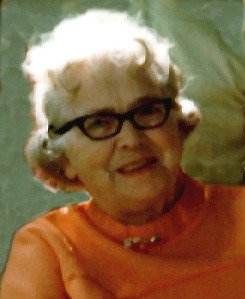
Ruby Odaffer was a busy mother who acted on her belief that having a quality little library in her farmhouse attic might be good for her kids.

Gertrude Plotnicky was a librarian at a university library who took a special interest in encouraging student workers to read.
Good for these people! And from someone who benefited greatly from their efforts, many thanks!